
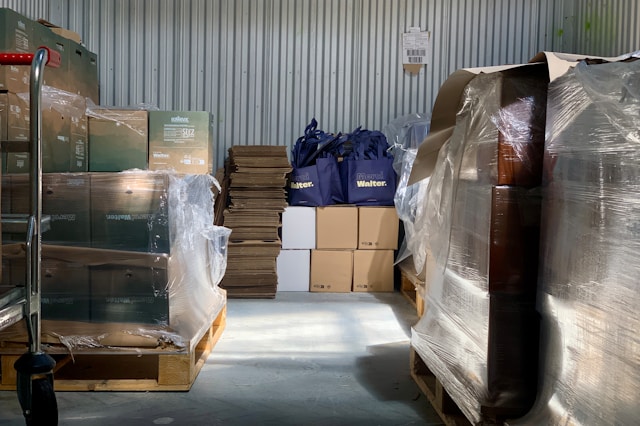
Most industrial packaging is designed in clean environments. Machines run predictably. Pallets are aligned. Loads are uniform. Inside factories, conditions are controlled and repeatable.
The moment a woven sack leaves this environment, everything changes.
The last mile is where packaging meets reality. Manual handling replaces automation. Weather replaces climate control. Improvised storage replaces standardized warehousing. And it is here, more than anywhere else, that packaging design is truly tested.
The Gap Between Design Assumptions and Handling Reality
Many sacks are designed assuming mechanical handling and ideal stacking. In practice, they are often lifted by hand, dragged across rough surfaces, or stacked unevenly on site.
Manual handling introduces unpredictable stress. Bags are gripped at corners, tilted mid-lift, or dropped from nonstandard heights. These forces rarely appear in laboratory testing, yet they dominate real-world performance.
Packaging that performs flawlessly in a factory can fail quickly once it enters this environment. The problem is not strength. It is mismatch.
Weather Is Not a Background Variable
In the last mile, exposure is constant. Sunlight, dust, moisture, and temperature swings interact with materials every day.
A sack stored outdoors may face repeated cycles of heat and humidity. Moisture may not penetrate immediately, but it weakens coatings, alters polymer flexibility, and increases abrasion damage. Ultraviolet exposure quietly reduces tensile strength, even when the bag still looks intact.
Designing for the last mile means accepting that weather is not incidental. It is structural.
Informal Storage and On-Site Stacking
Last-mile storage is rarely neat. Bags are stacked on uneven ground, leaned against walls, or piled higher than recommended. Load distribution becomes irregular, concentrating stress in specific areas.
In these conditions, sacks experience sustained compression and shear forces. Poorly designed bases deform. Seams stretch unevenly. Over time, these distortions reduce stability and increase the risk of sudden failure.
Packaging that anticipates these realities performs differently. Reinforced bases, balanced fabric construction, and controlled elongation help absorb irregular loads without cascading damage.
Why Last-Mile Failure Hurts More
A failure at the last mile is more visible than a failure upstream. It happens in front of customers, contractors, and end users.
A torn sack at a construction site or farm does more than waste material. It signals unreliability. It interrupts work. It shifts blame quickly, often toward the brand on the bag rather than the conditions around it.
From a trust perspective, last-mile failures cost more than early-stage losses. They erode confidence where it matters most.
Packaging as an Interface, Not a Container
At the last mile, packaging becomes an interface between factory intent and field reality. It translates engineering decisions into usable performance.
This means designing sacks that are not only strong but intuitive to handle. Balanced weight distribution, predictable deformation, and forgiving surfaces reduce misuse and damage.
When packaging works with human behavior rather than against it, failure rates drop naturally.
Rethinking Design Priorities
Designing for the last mile requires a shift in priorities. Instead of optimizing only for manufacturing efficiency, packaging must be evaluated across its full journey.
Field feedback, handling observation, and failure analysis at the point of use provide insights that no lab test can replicate. These insights should shape material selection, stitching patterns, and coating choices.
The result is packaging that feels robust not because it is heavier, but because it is more aware of where it will be used.
The Takeaway
The factory gate is not the end of packaging design. It is the beginning of exposure to uncertainty.
Industrial packaging that succeeds in the last mile is packaging that respects human handling, environmental unpredictability, and informal storage realities. It is designed not just for movement, but for use.
When packaging is built for the field as much as the factory, performance stops being theoretical and starts becoming dependable.