
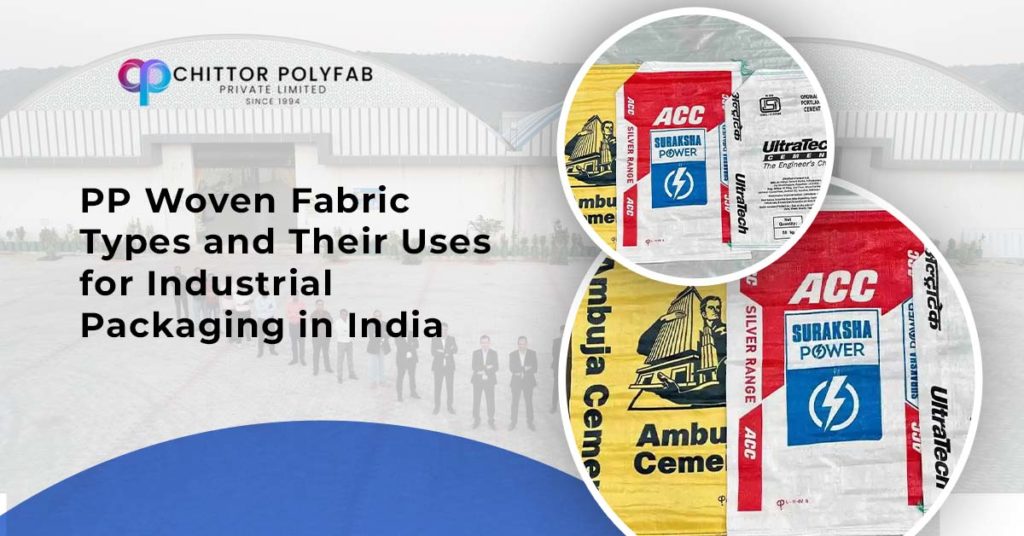
Introduction to PP Woven Fabric
What PP woven fabric is
PP woven fabric is a textile material made by weaving polypropylene tapes in a crisscross pattern to form a strong and flexible structure. This woven pattern provides high durability, making it suitable for industrial packaging applications where strength and stability are essential.
How it is produced
Polypropylene granules are melted, extruded into thin tapes, stretched for improved tensile strength, and then woven using flat or circular looms. The woven sheets can be laminated, coated, printed, or finished based on their end use. The final fabric is cut and converted into various industrial packaging products such as sacks, bags, sheets, and tarpaulins.
Why it is widely used in Indian industrial packaging
India’s agriculture, manufacturing, and construction sectors require bulk packaging solutions that are strong, lightweight, and cost effective. PP woven fabric meets these needs by offering high load capacity, moisture protection, and long service life. Its compatibility with mechanized filling systems and ease of transport make it a preferred choice for large scale operations.
Key advantages over traditional packaging materials
Compared to jute, paper, and thick plastic packaging, PP woven fabric offers better durability, higher tear resistance, improved moisture control, and more customization options. It also supports reusable and recyclable packaging goals, making it suitable for industries focused on reducing long term packaging costs.
Properties That Make PP Woven Fabric Ideal for Industrial Packaging
High tensile strength
The woven structure enhances load bearing capacity, allowing the fabric to handle heavy agricultural, chemical, and construction materials without tearing.
Flexibility and tear resistance
PP woven fabric resists damage from friction, rough handling, and stacking. Its flexibility helps absorb pressure and impact during transportation.
Moisture and chemical resistance
The fabric naturally repels moisture and can be laminated for added protection. It also withstands exposure to many industrial chemicals, making it suitable for fertilizers, minerals, and powdered materials.
UV stabilization for outdoor storage
UV stabilized variants prevent damage caused by prolonged sunlight exposure. This is essential for materials stored in open yards or construction zones.
Lightweight with strong load bearing ability
PP woven fabric remains lightweight while supporting heavy goods, helping businesses reduce shipping and handling costs.
Cost efficiency and long service life
Its reusability, low manufacturing cost, and long operational lifespan make it one of the most economical packaging options for Indian industries.
Major Types of PP Woven Fabric Used in India
Flat woven PP fabric
Produced using flat looms, this fabric offers smooth texture and uniform thickness. It is used for packaging sheets, tarpaulins, ground covers, and industrial wrapping.
Circular woven PP fabric
Circular looms weave the fabric into tubular form, which is then cut to create PP woven sacks and bags. It is widely used for fertilizers, grains, cement, and bulk goods.
Laminated PP woven fabric
A protective film is added to enhance moisture resistance and printability. Laminated fabric is used for fertilizers, chemicals, pet food, retail packaging, and export sacks.
Unlaminated woven PP fabric
Breathable and lightweight, unlaminated fabric is preferred for products that need ventilation, such as vegetables, seeds, and certain food grains.
UV stabilized woven fabric
Designed for outdoor storage, UV stabilized fabric maintains strength and color even under continuous sunlight. It is used in agriculture, construction, and landscaping.
PP woven fabric with liners
These fabrics include internal liners that provide extra protection against moisture and contamination. They are ideal for fine powders, chemicals, and food ingredients.
Colored or printed PP woven fabric
Colored and printed variants are used for branding, coding, and product identification. They support multi color designs for retail and industrial packaging.
Applications of Each PP Woven Fabric Type in Industrial Packaging
Packaging for fertilizers and agro products
Agricultural industries use PP woven fabric for packing urea, DAP, seeds, and organic fertilizers. Laminated and UV stabilized variants protect contents from moisture, sunlight, and rough handling during transport and field storage.
Cement and construction materials
Circular woven polypropylene fabric is widely used for cement sacks, sand bags, and packaging of construction chemicals. Its tear resistance and load bearing strength support heavy industrial materials across long distance haulage.
Food grains and pulses
PP woven fabric is used for storing and transporting rice, wheat, pulses, and flour. Unlaminated and ventilated fabrics help maintain freshness while laminated variants protect against moisture in warehouses.
Chemicals, minerals, and powders
Fine powders like limestone, silica, industrial minerals, and chemical granules are packaged in laminated PP woven fabric or bags with liners. These variants reduce leakage and prevent contamination during movement or export.
Sand, gravel, and building aggregates
Construction sites rely on strong PP woven fabric for sand and aggregate bags that resist tearing even under abrasive contact. UV stabilized versions are suitable for outdoor conditions and long storage.
Textile, retail, and FMCG products
Printed PP woven fabric is used in the textile and retail industry for promotional bags, protective covers, and bulk movement of packaged goods. Its high quality print surface supports branding and labeling for FMCG applications.
Industrial bulk storage and warehousing
Factories and warehouses use PP woven fabric for packaging raw materials, machine parts, and bulk goods. Its durability helps maintain stack stability, improve inventory handling, and reduce product loss in long term storage.
PP Woven Fabric vs Other Industrial Packaging Materials
Comparison with HDPE woven fabric
HDPE woven fabric is also durable, but PP woven fabric offers better print clarity, flexibility, and moisture resistance. PP tapes stretch more efficiently, resulting in higher tensile strength. For industrial packaging requiring branding and long distance transport, PP woven fabric provides superior performance.
Comparison with jute and burlap sacks
Jute bags are biodegradable and breathable but less durable and more prone to tearing under heavy loads. PP woven fabric outperforms jute in strength, lifespan, and moisture protection, making it more suitable for fertilizers, grains, and construction materials. Jute is preferred for aesthetic or niche uses, while PP remains dominant in industrial applications.
Comparison with multi layer plastic packaging
Multi layer plastic films provide high barrier protection but are expensive and less suitable for heavy or bulky goods. PP woven fabric offers a balanced solution by combining durability with flexibility. It carries heavy loads, resists punctures, and supports laminations without adding excessive cost.
Durability, cost, and environmental impact
PP woven fabric has a longer life cycle compared to paper or thin plastic packaging and requires less replacement over time. It is economical to produce, reusable in industrial environments, and recyclable after use. These benefits reduce overall packaging waste and support sustainable packaging goals across multiple sectors in India.
Manufacturing Process of PP Woven Fabric in India
Extrusion of polypropylene tapes
The process begins with melting polypropylene granules and extruding them into thin tapes. These tapes are stretched to increase tensile strength, ensuring the final fabric can withstand heavy loads and industrial handling. The quality of the tapes determines the strength and durability of the finished woven fabric.
Weaving on circular or flat looms
The stretched PP tapes are woven using circular or flat looms to create strong woven sheets. Circular looms are used to produce tubular fabric for sacks, while flat looms produce sheets for industrial wrapping and covers. The weaving pattern enhances load bearing properties and provides the signature flexibility of PP woven fabric.
Lamination and coating
For applications requiring moisture resistance or glossy finish, the woven fabric is laminated with a protective film. Coating options are also available for improved sealing, reduced permeability, and enhanced print quality. Laminated fabric is ideal for fertilizers, chemicals, and food grain packaging.
Flexo and rotogravure printing
Industrial packaging often requires branding, instructions, and product details. Flexographic and rotogravure printing methods are used to apply high resolution graphics on PP woven fabric. Rotogravure allows multi color printing up to eight shades, providing sharp and vibrant designs suitable for retail and export packaging.
Cutting, shaping, and finishing
After printing and lamination, the woven fabric is cut into sheets or tubular sections based on the required size. Stitching or heat sealing is used to create bags, sacks, and covers. Additional features such as gussets, liners, and handles are added during this stage.
Quality control and testing methods
Each batch of PP woven fabric undergoes strict testing for tensile strength, tear resistance, seam durability, moisture resistance, and UV stability. These tests ensure the fabric performs reliably in industrial environments with heavy loads and long term storage requirements.
Benefits of Using PP Woven Fabric for Industrial Packaging
Reduction in product damage and loss
The tear resistant structure of PP woven fabric protects packed materials from leakage, punctures, and environmental exposure. This reduces wastage and ensures safe handling in demanding conditions.
Enhanced storage and handling efficiency
PP woven fabric supports stable stacking, smooth loading, and efficient warehouse management. Its lightweight nature reduces strain during manual handling while maintaining high strength for bulk storage.
Better branding and labeling options
The surface of PP woven fabric allows clear printing of logos, barcodes, and product information. This helps manufacturers maintain brand identity and comply with labeling standards across industries and export markets.
Long distance transport suitability
PP woven fabric remains stable during long haul transportation, resisting moisture, friction, and pressure changes. It is suitable for road, rail, and sea shipment of bulk materials.
Lower cost for bulk packaging operations
Compared to jute, multi layer plastics, and rigid packaging, PP woven fabric is more cost effective. Its durability reduces replacement frequency, while its recyclable nature supports sustainable packaging goals. This combination makes it ideal for high volume industrial operations.
Key Industries in India Using PP Woven Fabric Packaging
Agriculture and fertilizer manufacturers
The agriculture sector relies heavily on PP woven fabric for packaging fertilizers, seeds, grains, and agrochemicals. Its moisture resistance and durability ensure safe handling from farms to distribution centers.
Food grain and flour mills
Rice mills, flour mills, and grain storage units use PP woven fabric sacks for packing wheat, rice, pulses, and flour. The fabric maintains product freshness and prevents spoilage during long term storage.
Cement and construction sector
Cement producers and construction material suppliers use PP woven fabric for cement bags, sand bags, and aggregate packaging. Its tear resistance and load capacity make it ideal for rugged industrial handling.
Chemical and mineral suppliers
Industries dealing with minerals, industrial powders, and chemicals choose laminated PP woven fabric for leak proof and contamination free packaging. Its chemical resistance improves safety during transport.
Retail and consumer goods
Retailers use printed PP woven fabric bags for promotional packaging, bulk movement of goods, and protective covers. High quality printing improves branding and shelf appeal.
Export packaging companies
Exporters depend on PP woven fabric for its lightweight structure, moisture resistance, and compliance with international standards. It ensures product stability during long distance shipments by sea or land.
How to Choose the Right Type of PP Woven Fabric for Your Application
GSM and material quality
Higher GSM fabric offers better strength and is suited for heavy industrial materials, while lower GSM works for lightweight goods. Choosing virgin PP granules enhances durability.
Lamination requirements
Products sensitive to moisture or requiring high quality printing benefit from laminated PP woven fabric. Unlaminated fabric is preferred for breathable applications like food grains and vegetables.
Load capacity and bag size
Different industries require different carrying capacities. Selecting the right size and weave strength prevents tearing and improves performance in bulk packaging.
Moisture sensitivity of the product
Chemical powders, fertilizers, and food ingredients often need extra protection. Laminated or liner based PP woven fabric helps maintain product integrity.
Storage conditions and transportation needs
For outdoor storage or long distance transport, UV stabilized or reinforced fabric ensures stability. Indoor storage may require simpler variants depending on the application.
Printing and customization needs
Industries with branding or compliance requirements should choose fabric that supports multi color printing, barcodes, and product labeling. Printing clarity is vital for retail and export packaging.
Final Thoughts
Why PP woven fabric will continue to dominate industrial packaging
PP woven fabric remains unmatched in strength, versatility, and cost efficiency. Its ability to carry heavy loads, withstand rough handling, and support multiple customization options makes it central to India’s industrial supply chains.
Its growing role in export and sustainable packaging in India
As India expands its global trade footprint, PP woven fabric is becoming a preferred export packaging material due to its lightweight design and compliance with international standards. Its reusable and recyclable nature also supports the increasing demand for sustainable packaging across industries.